
Invoicing and payment collection for freelancers
Screenshots
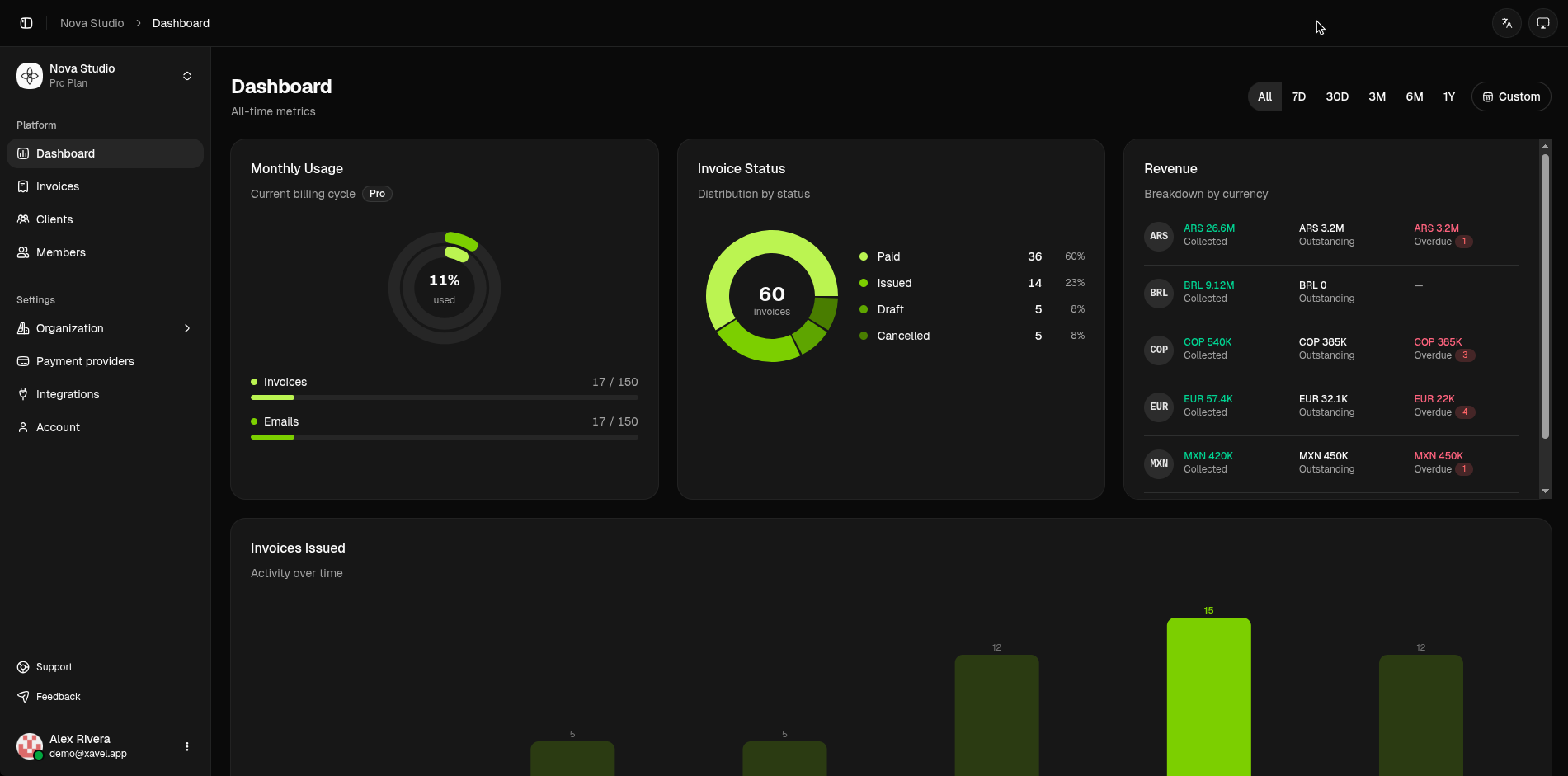
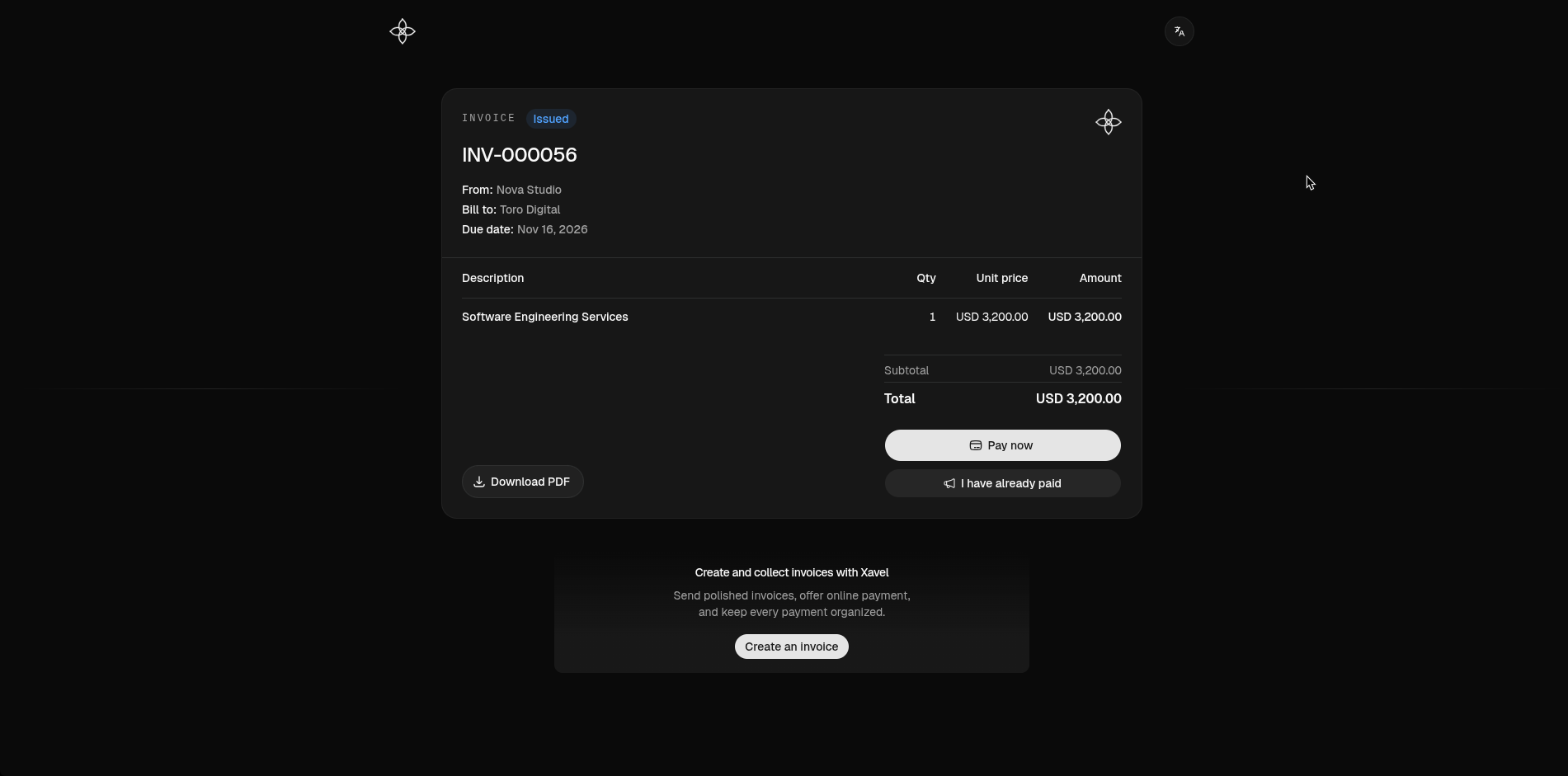
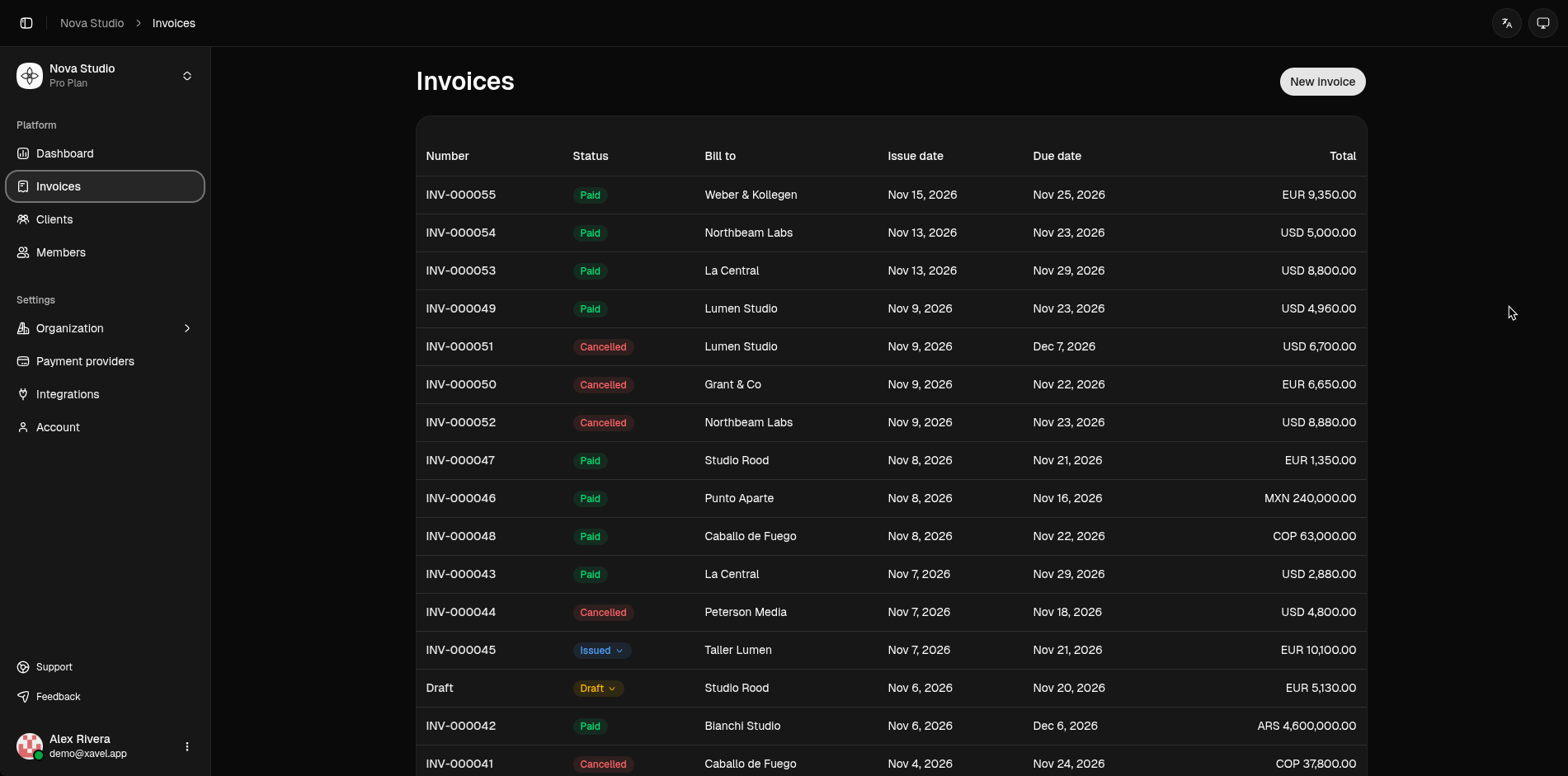
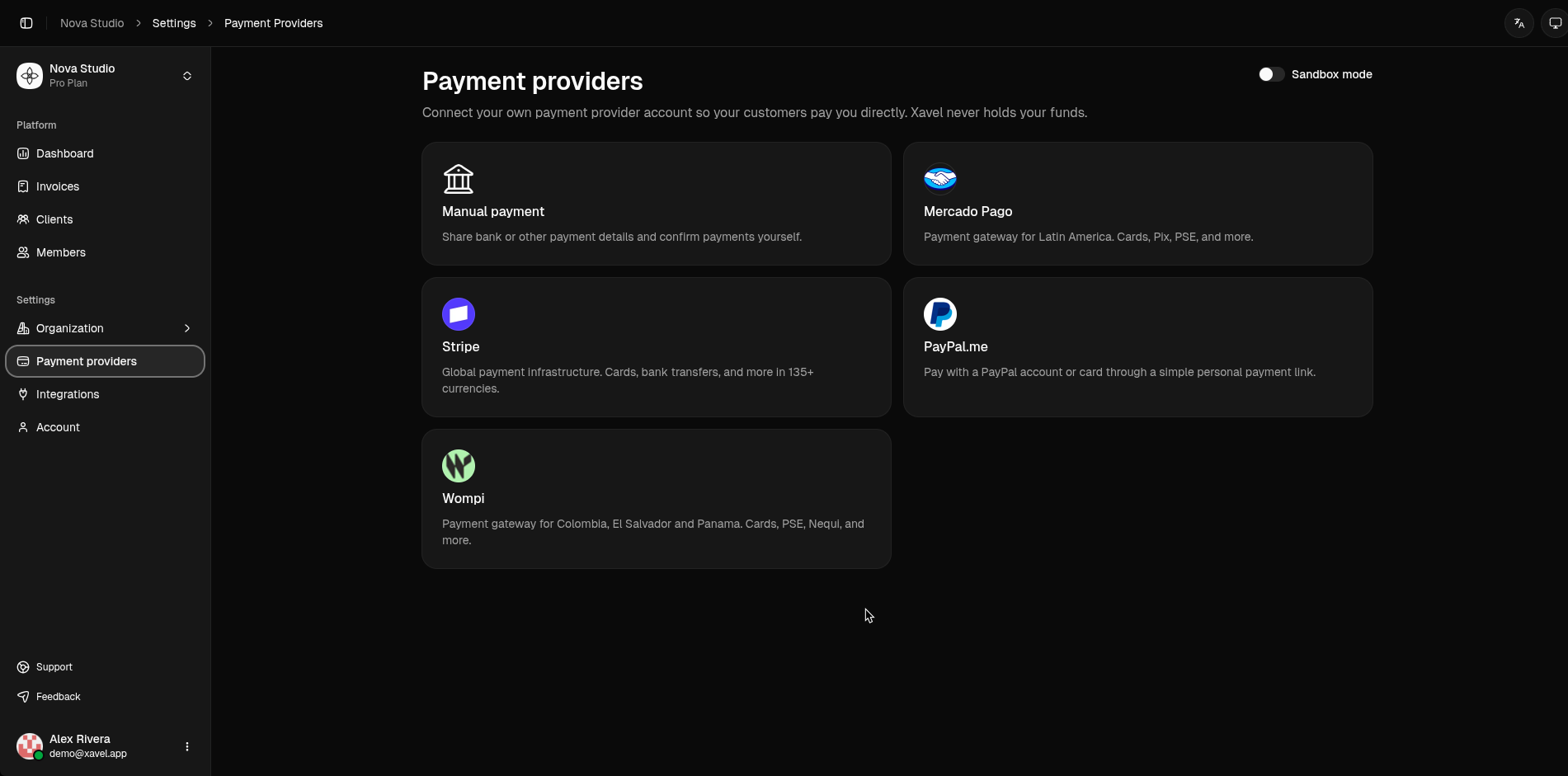
The invoices I had to prepare every month
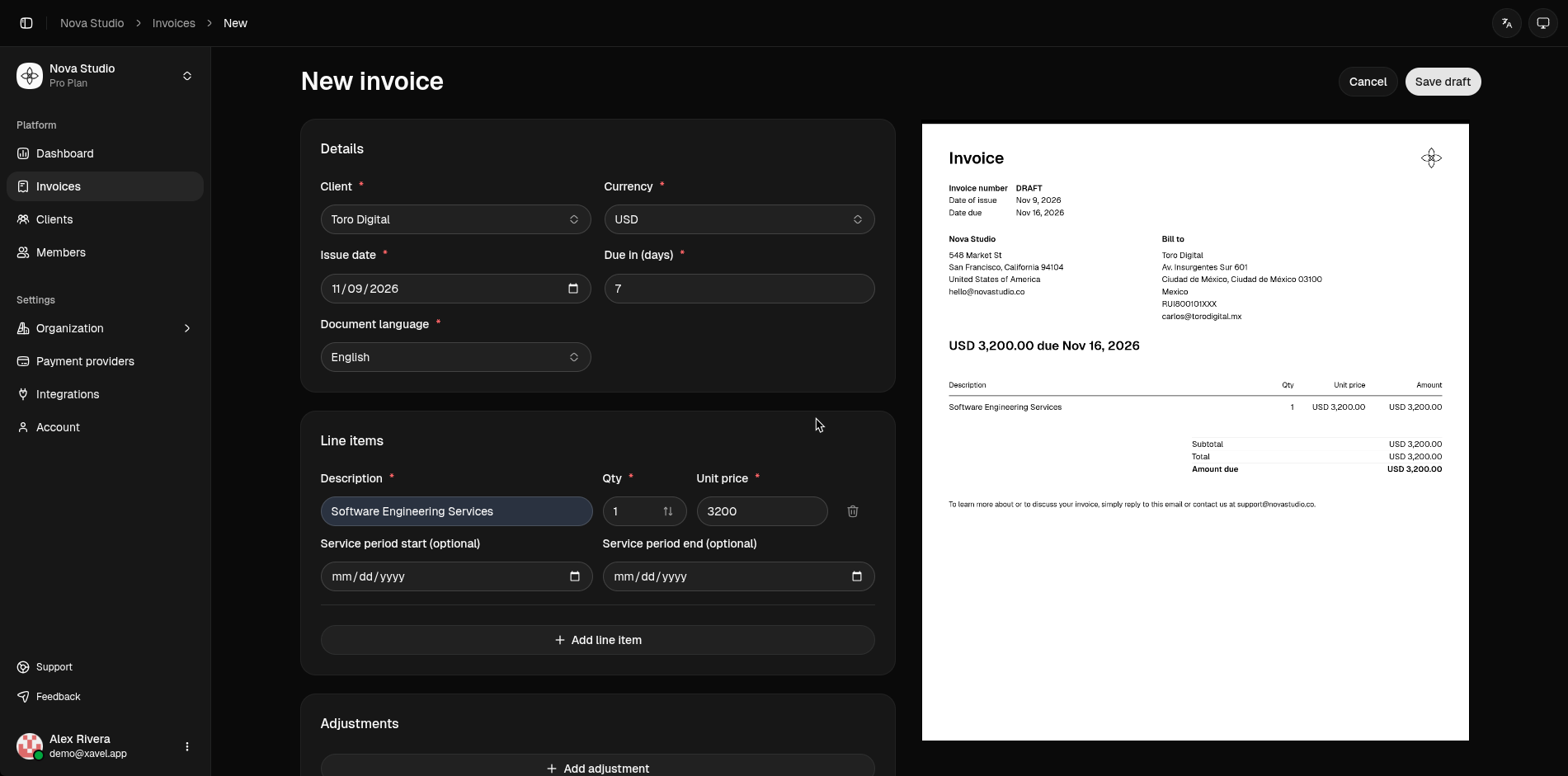
My clients and the company I work with needed a monthly invoice to pay my fees. I used a Google Sheets template and kept making the same edits: dates, billing periods, descriptions and client details. Working with clients in different countries also meant checking the currency.
Xavel started as a way to stop repeating that work. Its first name was Rxture. I built it for my own invoices, and it grew into a product other people use too.
From preparing the invoice to tracking payment
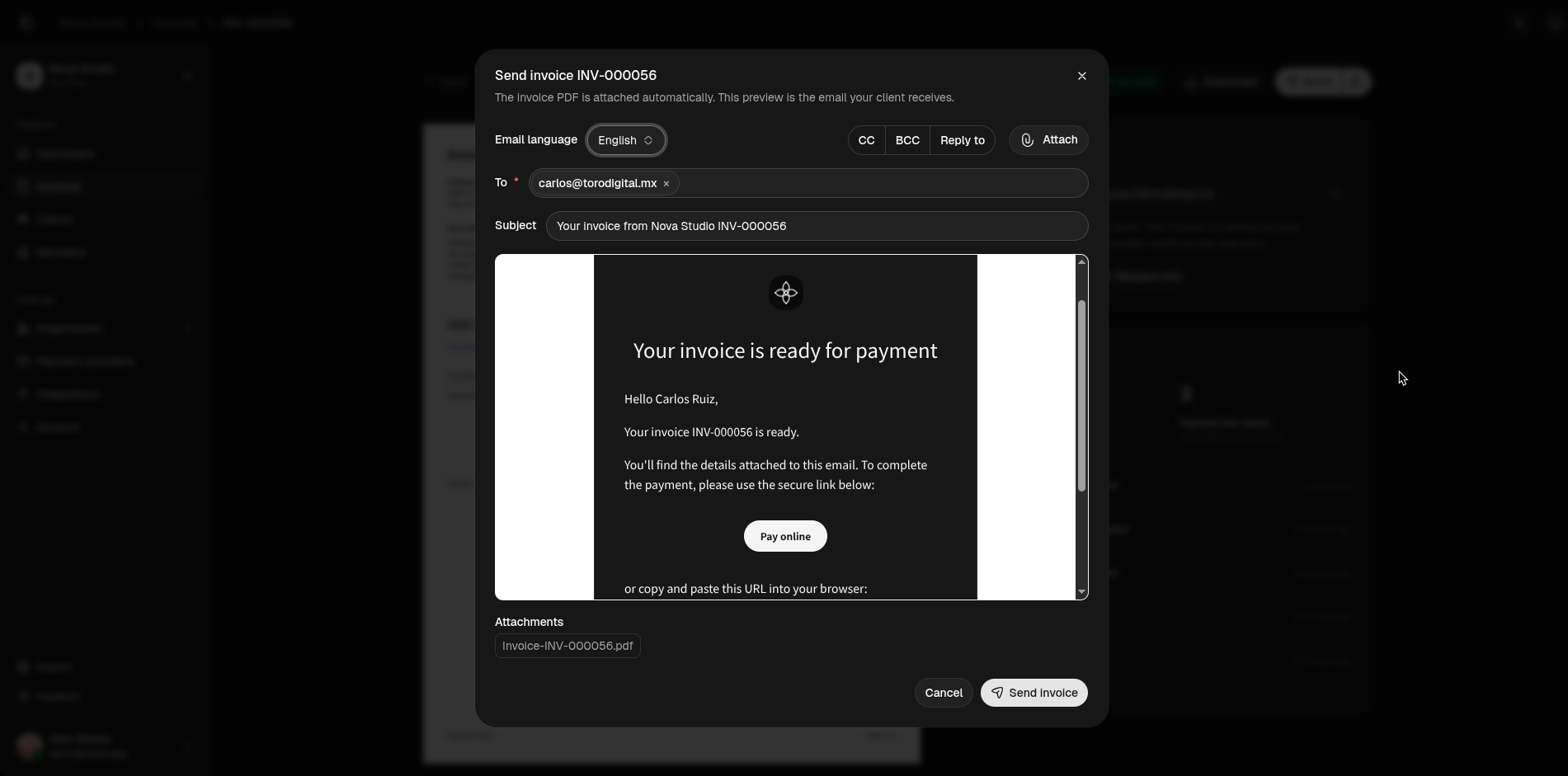
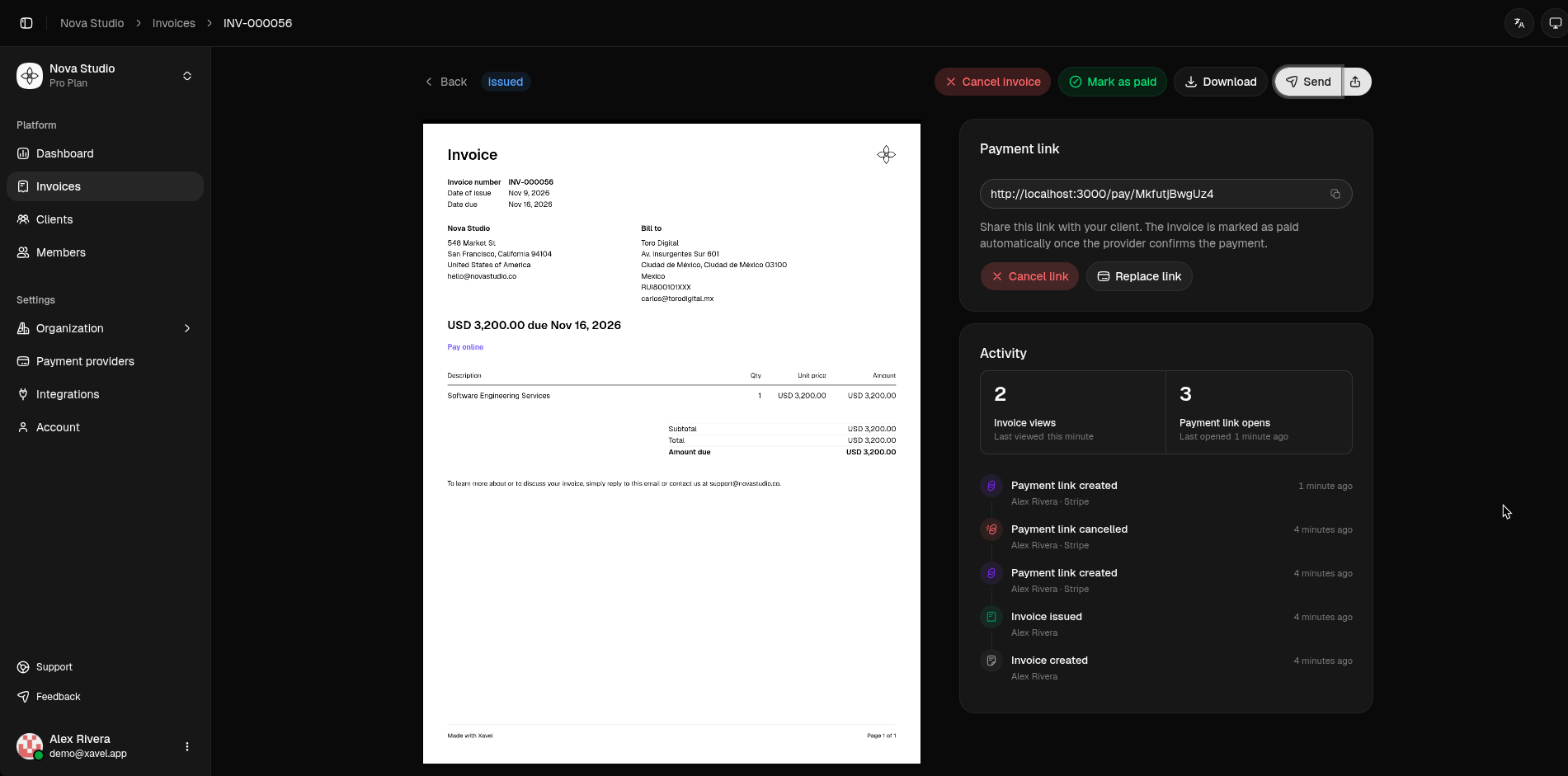
In Xavel, I register clients once and reuse their details when preparing an invoice. I can review the document, issue it, email it with its PDF and track payment.
I kept those actions separate: issuing an invoice doesn’t automatically create a payment request, and sending it doesn’t change its financial status. An issued invoice can remain unpaid without being tied to a payment provider.
Changing frameworks without rewriting invoicing
The first version used Next.js. I later moved to Svelte and also became too tightly coupled to a payment provider. Each change dragged more business logic along than it should have.
I reorganized the product into capability-based modules, including invoicing, clients and payments, with ports and adapters where I needed replaceable integrations. An invoice’s rules don’t depend on React, TanStack or a provider SDK. Persistence and provider-specific details stay in their adapters.
I chose TanStack Start for the current implementation. If I change the interface again, I want to keep the rules and use cases I’ve already worked out.
Explicit contracts between the interface and server
With oRPC, I define each operation’s inputs, outputs and errors before wiring up its handler. Those contracts provide types for consumers and validation on the server. Handlers delegate behavior to application use cases instead of holding the business rules themselves.
That also leaves room for other clients to consume the same operations without having to reproduce invoicing logic.
Cases I didn’t want to leave for later
- Changing a client must not rewrite an issued invoice. The invoice keeps snapshots of both billing parties. Its history doesn’t depend on their profiles staying the same.
- Two requests must not issue the same draft twice. Issuance checks the state and saves conditionally against the draft. A request that loses that race gets an explicit result.
- Currencies don’t all work the same way. Amounts use integer minor units, with different handling for currencies with and without decimals, such as USD and CLP.
- Reporting a payment isn’t proof it arrived. A report stays pending until reviewed. If a provider has already confirmed payment, the review preserves that receipt rather than replacing it.
These behaviors have domain and application tests that run without starting the interface or connecting to a payment provider.
Built with
- oRPC
- Cloudflare
- SOLID
- R2
- Design Patterns
- Clean Code
- CI/CD
- Vertical Slicing
- Clean Architecture
- Screaming Architecture